

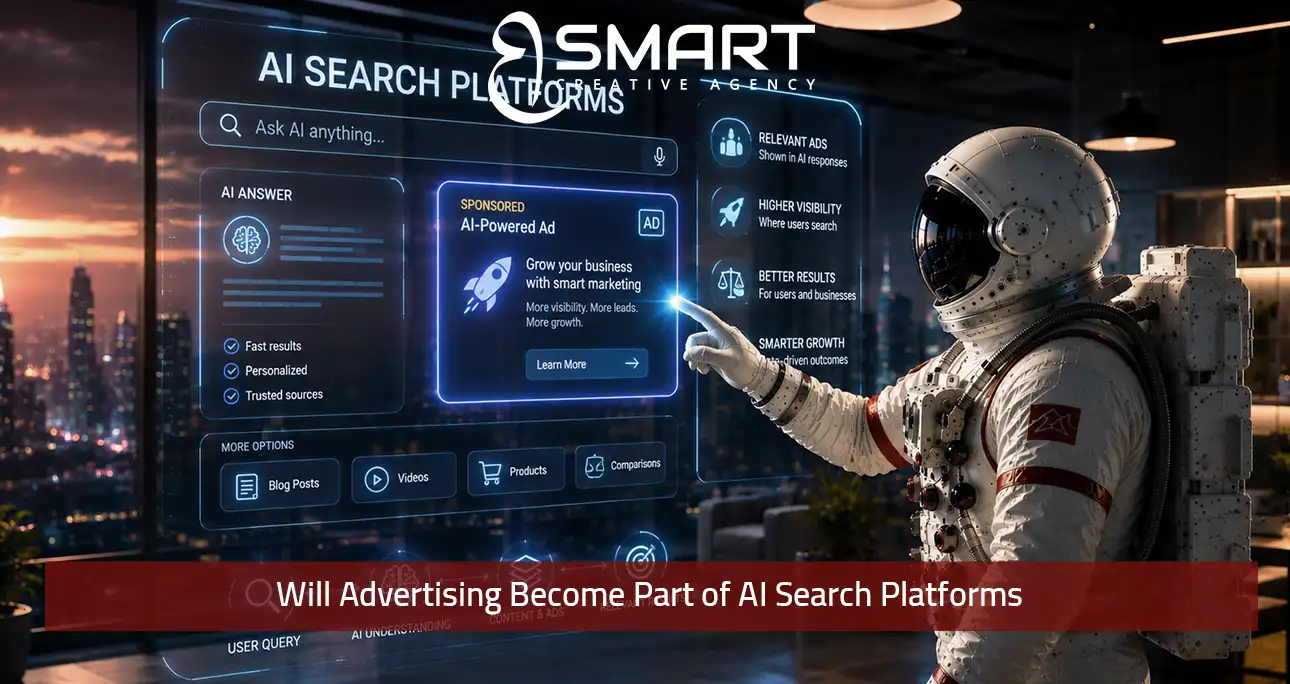
This is no longer a speculative question about a distant future possibility — it’s an active, ongoing shift that businesses need to understand and prepare for now, because the mechanics of how advertising integrates into AI-powered search and assistant platforms will directly affect how businesses reach customers going forward, in ways that parallel, but also meaningfully differ from, how advertising developed within traditional search engines.
How AI Search Platforms Are Following the Evolution of Traditional Search
The trajectory is a familiar one if you consider how traditional search engines evolved: they began as purely organic, algorithm-driven results, and advertising was introduced later as a way for businesses to gain visibility for competitive terms and as a primary revenue mechanism for the platforms themselves. AI-powered search and assistant platforms are following a broadly similar path — beginning primarily with AI-generated organic responses synthesized from various sources, with advertising integration being actively developed and introduced as these platforms mature and seek sustainable revenue models beyond their initial launch phase, and as user adoption reaches a scale that makes advertising integration commercially significant for the platforms.
How Advertising May Appear in AI-Generated Search Results
The specific mechanics of how advertising appears within AI-generated responses differs meaningfully from traditional search advertising’s separate, clearly labeled ad units displayed alongside organic results. AI-generated responses tend to synthesize information into a single, conversational answer rather than a list of ranked links, which means advertising integration is more likely to take the form of sponsored recommendations woven into or appended to that synthesized response, sponsored placement or preference given to specific businesses when the AI is recommending options for a category, or entirely new advertising formats specific to conversational AI interactions that don’t have a direct precedent in traditional search advertising. Businesses should expect these formats to continue evolving as platforms experiment with what works both commercially for the platform and acceptably for user experience and trust, since a core tension the platforms need to manage is user trust in the AI’s recommendations, which advertising integration risks undermining if handled poorly or without adequate transparency.
Why Businesses Should Prepare for AI Search Advertising
The practical implication for businesses is that both organic optimization and paid advertising strategies need to extend to these emerging platforms alongside traditional search engines, rather than treating AI search as a separate, lower-priority consideration to address only once its advertising mechanics are fully mature and well-established. Businesses that establish a strong presence — through both being genuinely referenced and cited favorably in AI-generated organic responses, and being positioned to take advantage of advertising opportunities as they roll out — earlier in this platform maturation cycle stand to gain a meaningful advantage over competitors who wait until the mechanics are fully established and the competitive landscape within these new advertising formats has already become saturated and expensive, a pattern that closely parallels how businesses that established strong organic and paid presence early in traditional search engines’ development gained a lasting advantage over later entrants competing in an already-mature, more expensive advertising landscape.
Organic SEO Will Continue to Matter
Understanding the specific mechanisms that currently earn favorable treatment in AI-generated organic responses — comprehensive answer to user’s actual question, structured and clearly organized content, demonstrated expertise and credibility signals, and technical accessibility that allows AI systems to properly crawl and understand a website’s content — provides a foundation that will likely remain relevant even as paid advertising options are introduced, since platforms are likely to continue favoring genuinely high-quality, trustworthy sources for their core organic recommendations regardless of what paid advertising options they introduce alongside those recommendations, given that maintaining user trust in the platform’s core recommendation quality remains commercially essential to the platform’s own long-term success and adoption.
The Advantage of Early Adoption
Businesses should also anticipate that early advertising formats within AI platforms, as they emerge, may offer meaningfully better value and lower competition than they will once these formats mature and attract broader competitive adoption, mirroring the well-documented pattern from earlier digital advertising platforms where genuinely favorable, less competitive advertising costs were available to early adopters before broader market awareness and competition drove costs up as the platform and format matured. Monitoring the specific advertising mechanics and formats as individual AI platforms roll them out, and being prepared to test and adopt promising new formats early rather than waiting for them to become an established, more expensive norm, represents a genuine strategic opportunity for businesses paying close attention to this evolving landscape, rather than a speculative consideration to defer indefinitely until the picture becomes fully settled.
A Practical Action Plan for Businesses
Monitor Your Brand Across AI Platforms
A sensible near-term action plan for most businesses is to begin tracking whether and how their brand is currently being referenced by major AI assistants and search tools when a relevant question is asked, treating any gaps as a priority for the organic optimization work described elsewhere in this document, while simultaneously assigning someone on the team to monitor announcements from these platforms about emerging advertising or sponsored-placement options specific to AI-generated results, since these announcements tend to arrive with relatively little advance notice and reward businesses that are already watching closely. Businesses that build this monitoring habit now are positioned to move quickly and take advantage of favorable early conditions, rather than discovering the opportunity only once it has already matured into a crowded, more expensive advertising landscape.
The Future of AI Search Advertising
It’s also worth acknowledging the genuine uncertainty involved in predicting exactly how these advertising formats will evolve, since these platforms are still relatively early in their development and are actively experimenting with different approaches to balancing commercial viability against maintaining user trust in the quality and impartiality of their core recommendations. Businesses should treat specific predictions about exact formats and mechanics with appropriate humility, while still treating the broader directional trend — that advertising integration within AI search is coming and is worth preparing for — as a reasonably confident expectation grounded in how every previous major information platform, from print directories to traditional search engines, has eventually evolved once user adoption reached sufficient scale to make advertising commercially significant for the platform itself, a pattern with few historical exceptions once a discovery platform reaches mainstream, everyday usage among the general public rather than a small early-adopter audience.
Discover More Answers
AI search optimization :How Can I Optimize My Website for AI-Powered Search Engines?


