

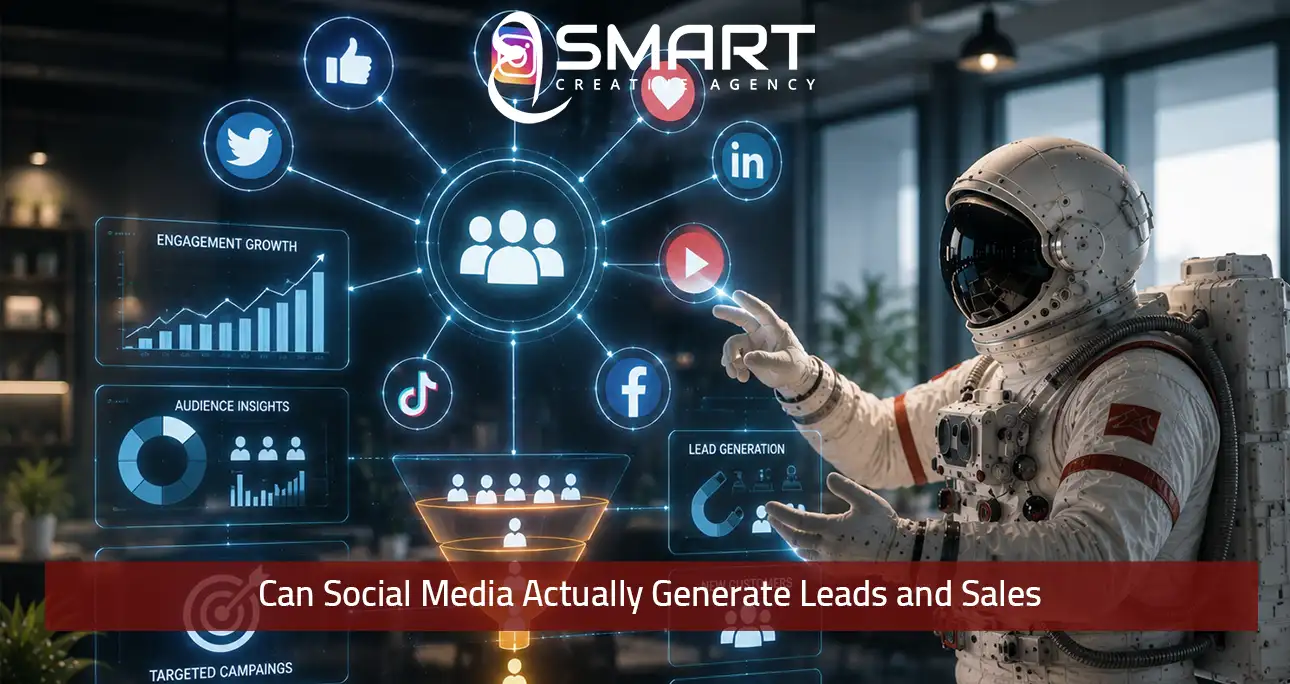
Skepticism about social media’s ability to directly generate leads and sales, rather than just “brand awareness,” is understandable given how often social media is discussed in vague, unmeasurable terms — but this skepticism usually reflects poor strategy execution rather than a genuine limitation of the channel itself, and businesses that treat social media as a deliberate, structured lead-generation channel rather than a passive brand presence consistently see measurable, attributable results from it.
Building a Social Media Strategy That Generates Leads
The first requirement for social media to function as a genuine lead-generation channel, rather than just an awareness tool, is a deliberate content strategy built around a clear conversion path, not simply posting content and hoping engagement translates into business results on its own. This means every piece of content should have an intentional role in the funnel: some content builds awareness and trust with prospects who aren’t yet ready to buy, some content demonstrates expertise and addresses specific concerns that move a prospect closer to a decision, and some content includes a direct, clear call to action for prospects who are ready to take the next step. Businesses that post only broad, generic brand content without ever including direct calls to action are, by design, not asking prospects to convert, and then conclude the channel doesn’t generate leads — when in fact they never actually built a path for it to do so.
Using Targeted Social Media Advertising for Lead Generation
Targeted advertising is where social media’s lead generation capability becomes most directly measurable and comparable to other paid channels. Modern social advertising platforms offer highly specific audience targeting based on demographics, interests, behaviors, and — critically — the ability to retarget people who have already engaged with your business in some way (visited your website, engaged with previous content, or are similar to your existing customers). This combination allows social advertising to reach genuinely qualified prospects with a directly measurable cost per lead and cost per conversion, functioning very similarly to search advertising in terms of measurability, just with a different targeting mechanism based on audience characteristics rather than active search intent.
The Role of Organic Social Media in Lead Generation
Organic social media’s lead generation contribution is real but operates on a different, often longer and less directly attributable timeline, which is why it’s frequently underestimated in simple analytics reports that only credit the last touchpoint before a conversion. A prospect might first encounter a business through an organic social post, follow the account, engage with several pieces of content over weeks or months building trust and familiarity, and then eventually convert through a completely different channel — a direct search, a referral, or a direct visit to the website — with the social media engagement that built the trust never showing up as the “source” of that conversion in standard analytics. This doesn’t mean the social media activity wasn’t a genuine, meaningful contributor to the eventual sale; it means measuring social media’s contribution requires looking beyond simple last-click attribution to understand its actual role in building the trust and familiarity that made the eventual conversion possible.
How Social Proof Increases Leads and Sales
Social proof embedded directly within social content — genuine customer testimonials, case studies, user-generated content showing real customers using a product or service — is a particularly effective lead generation mechanism because it addresses the trust barrier that prevents many otherwise-interested prospects from taking action, and it does so in a format that feels authentic and native to the platform rather than obviously promotional. Content built specifically around real customer results and experiences consistently outperforms generic promotional content in generating genuine inquiries and leads, because it directly answers the “will this actually work for someone like me” question that sits behind most purchase hesitation.
Practical Framework for Social Media Lead Generation
The practical framework for social media as a genuine lead generation channel includes several concrete elements: a clear, defined call to action present in a meaningful proportion of content, not buried occasionally as an afterthought; dedicated landing pages for social traffic that match the specific content and offer that drove the click, rather than sending all social traffic to a generic homepage; consistent use of tracking parameters so conversions can actually be attributed back to specific social content and campaigns rather than disappearing into unattributed direct traffic; and a combination of organic content for longer-term trust building alongside targeted paid promotion for more immediate, directly measurable lead generation. Businesses that implement this structured approach, rather than posting content passively and hoping for results, consistently find that social media contributes meaningfully and measurably to their lead pipeline — the channel’s capability is genuinely there; it requires a deliberate strategy to unlock it rather than treating it as inherently limited to brand awareness alone.
How to Audit Your Social Media for Lead Generation
A quick audit of your own social media activity reveals whether it’s currently structured to generate leads at all: look back through your last twenty posts and count how many included a specific, clear call to action directing the viewer toward a next step, versus how many were purely informational or promotional with no directed action at all. If the overwhelming majority fall into the second category, the honest conclusion is not that social media doesn’t generate leads for your business — it’s that your current content strategy has never actually asked it to, and building in that direct conversion path, even for a portion of your content, is usually all that’s required to start seeing measurable, attributable results from a channel that was previously treated purely as a brand-awareness exercise.
Setting Realistic Expectations for Social Media Lead Generation
It’s also worth setting a realistic expectation about volume: social media lead generation, even when well structured, typically produces a smaller absolute number of leads than a well-optimized paid search campaign targeting active, high-intent searchers, simply because it’s capturing prospects at an earlier, less urgent stage of their decision process. This isn’t a weakness to be corrected, but a characteristic to plan around — social-sourced leads often require more nurturing before they’re ready to convert compared to a lead who searched directly for your exact service, and judging social media’s lead quality by the same immediate-conversion standard applied to high-intent search traffic will make a genuinely valuable channel look artificially weak simply because it’s being measured against the wrong benchmark for the stage of the funnel it actually operates in.
Discover More Answers
Branding vs Marketing:What Is the Difference Between Branding and Marketing?


