

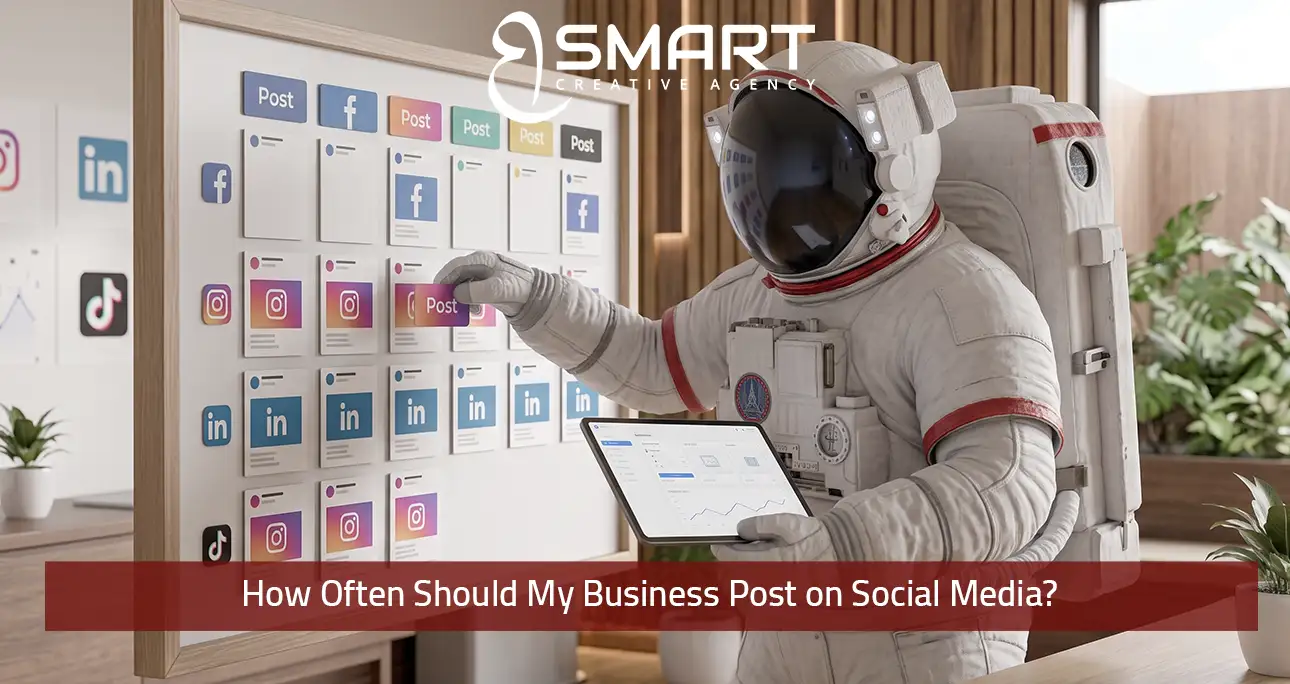
The search for a single universal posting frequency number — three times a week, once a day, five times a day — misses the more important underlying question, because the “right” frequency is determined by your specific audience’s expectations, your capacity to maintain genuine quality at that frequency, and the particular platform’s algorithm behavior, not by a generic rule that applies equally to every business and platform.
Consistency and Quality Matter More Than Frequency
The most important principle, and the one most frequently violated by businesses chasing an arbitrary frequency target, is that consistency and quality substantially outweigh raw frequency. A business posting three genuinely valuable, well-crafted pieces of content per week, reliably on the same days, will typically outperform a business posting daily but with rushed, low-value content produced simply to hit a frequency quota. Audiences and platform algorithms alike respond to engagement signals — comments, shares, time spent viewing — and low-quality content produced purely for frequency’s sake tends to generate weak engagement, which can actually suppress a business’s overall reach on platforms where the algorithm interprets low engagement as a signal to show that account’s content to fewer people going forward, regardless of how often they post.
Platform-Specific Posting Frequency
Platform-specific behavior genuinely differs and should inform frequency decisions rather than applying one rule everywhere. Platforms built around rapid content cycling and short-form, ephemeral content generally reward and even require higher frequency to maintain visibility, because content moves through feeds quickly and older posts lose relevance within hours. Platforms built around more considered, professional content, or those where content has a longer effective shelf life within users’ feeds, generally reward less frequent but more substantial posting, where a smaller number of genuinely valuable posts per week performs better than a high volume of lighter content. Applying a high-frequency strategy suited to one platform’s algorithm to a fundamentally different platform, without adjusting for that platform’s actual content lifecycle, often produces poor results specific to that mismatch.
Understanding Audience Expectations
Audience expectations, which vary meaningfully by industry and existing relationship with the audience, matter as much as platform mechanics. A B2B audience following a company for industry insights and thought leadership typically expects and responds well to a measured, less frequent posting cadence focused on substantive content, while a consumer-facing brand in a highly visual category may be expected to post more frequently to stay relevant in a fast-moving feed environment where competitors are posting frequently as well. Understanding what your specific audience actually expects, rather than assuming a generic industry-wide standard, requires paying attention to your own engagement data rather than external benchmarks: does engagement stay steady or decline as you increase frequency, and does it hold up or drop when you post less often?
Balancing Posting Frequency with Available Resources
Resource capacity is a practical constraint that should genuinely shape frequency decisions rather than being treated as an obstacle to overcome regardless of cost. A business committing to a daily posting schedule that it cannot sustain with genuine quality over the medium and long term will typically experience a decline in content quality as the frequency commitment strains available time and creative capacity, which produces worse results than a more modest, sustainable frequency maintained consistently over time. It is substantially better to commit to a frequency that can be sustained indefinitely with consistent quality than to start with an ambitious frequency that inevitably becomes irregular or declines in quality after the first few weeks or months, because irregular posting patterns themselves can suppress algorithmic reach on several platforms that specifically reward consistency signals.
How to Find the Right Posting Frequency
The practical approach to determining your specific right frequency is to start with a genuinely sustainable baseline — commonly three to five posts per week across most business contexts and platforms, adjusted up for platforms and content formats that specifically reward higher frequency, and down for more considered, professional platforms and content types — and then adjust based on your own actual engagement data over a testing period of four to six weeks, rather than either an arbitrary number pulled from a generic industry guide or an unsustainable ambitious target that inevitably collapses under its own resource demands. The right frequency is ultimately the highest frequency at which you can consistently maintain genuine quality and relevance for your specific audience, sustained reliably over time, rather than a fixed universal number that ignores your actual capacity and your audience’s actual response.
Test and Measure Your Social Media Performance
A simple experiment removes most of the guesswork from this decision: pick a sustainable baseline frequency, hold it steady for four to six weeks while tracking engagement rate (not just raw likes, but comments, shares, and saves relative to reach), then deliberately increase frequency for a similar period and compare the engagement rate, not just the total volume of engagement, between the two periods. If engagement rate per post holds steady or improves at the higher frequency, you likely have room to post more; if it declines noticeably, you have found your specific audience’s actual saturation point, which is far more reliable evidence than any generic industry recommendation, because it reflects how your specific followers actually respond rather than an average across unrelated businesses and audiences.
Planning for Long-Term Content Sustainability
It’s also worth planning for sustainability beyond the immediate testing period described above. Many businesses launch an ambitious posting schedule with enthusiasm in the first month, only to see it decline sharply once the initial momentum fades and daily operational demands compete for the same time and attention. Building a simple content calendar one to two months in advance, batch-creating content in dedicated sessions rather than trying to create something fresh each individual day, and assigning clear ownership of the responsibility within the team are practical structural changes that make a chosen frequency far more likely to actually be sustained six months from now, rather than quietly lapsing back to sporadic, inconsistent posting once the initial enthusiasm wears off — which is, in practice, a more common cause of poor social media results than choosing the wrong frequency number in the first place, and far easier to fix once it’s recognized as a scheduling and workflow problem rather than a strategy problem.
Discover More Answers
social media lead generation :Can Social Media Actually Generate Leads and Sales?


